Dress, timing and the night itself
Rojo Tango night: dress and timing
What to wear to El Cabaret, how the transfer and the evening run, what you see and hear on stage, and who should skip it, checked against official pages.
See Rojo Tango dates on GetYourGuide ↗Quick answer
Dress smartly. The Faena lists El Cabaret's dress code as business casual, so leave sportswear, beachwear and flip-flops at your hotel. A private transfer collects you and brings you back, so you don't need to plan transport. The show runs a little over an hour, after dinner if you booked it, and your confirmation shows the start time. Expect stage tango with live music and song, and no dialogue to follow.
What to wear
The Faena lists El Cabaret's dress code as business casual, and smart casual is the lowest you should aim for. Trousers and a collared shirt, a dress, or smart separates all fit the room, with a jacket if you like one. Leave sportswear, beachwear and flip-flops behind. Because the transfer drops you at the hotel, you'll walk very little, so you can choose shoes for looks rather than for a long walk. Dress for an evening of sitting, eating and watching.
Dressing for the season
Buenos Aires sits in the Southern Hemisphere, so its seasons run opposite to those of Europe and North America. Summers are hot and humid, with frequent thunderstorms. Winters are cool and drier, with frost only rarely. Spring and autumn bring changeable weather from one day to the next. In practice that means an umbrella or light rain layer in summer, and a proper coat in winter for the moments between the car and the door. The show is indoors, so the weather shapes only what you wear on the way.
Getting there and back
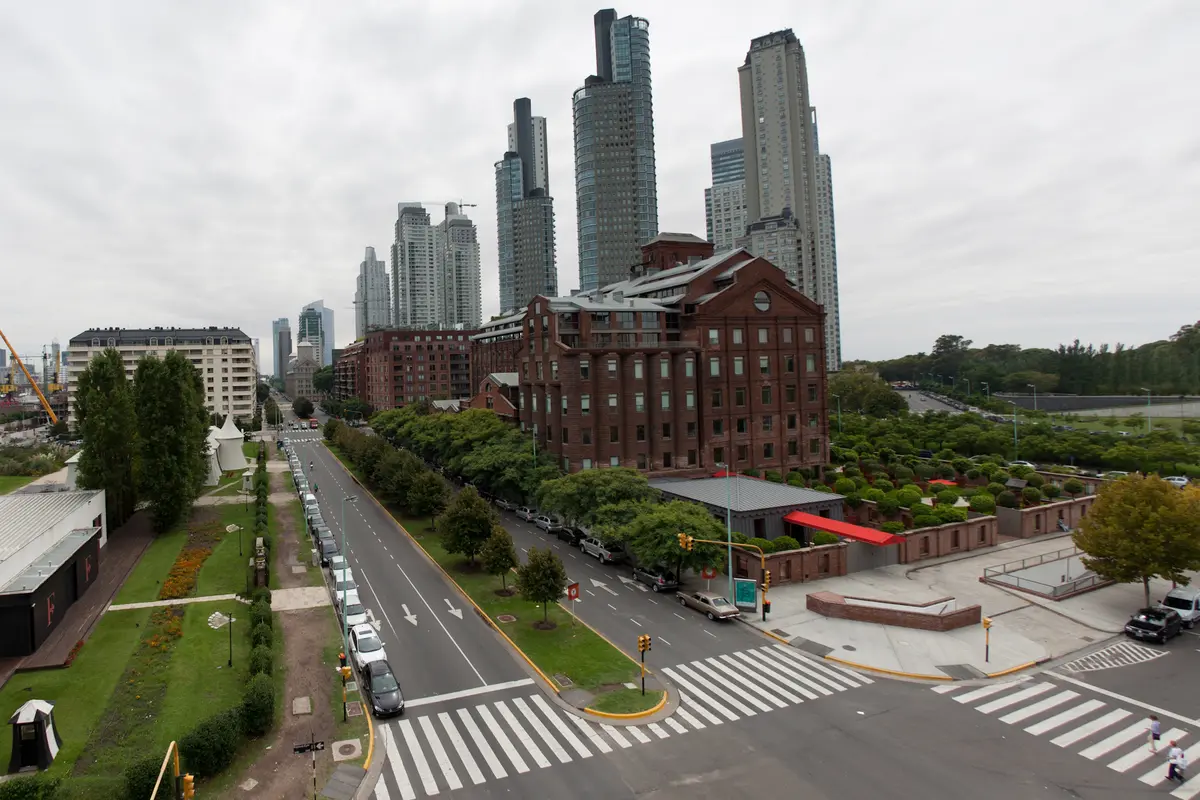
Both options include a private transfer from your hotel and back, and that matters here. Puerto Madero is poorly connected to public transport: no subway line reaches the neighbourhood, and few bus routes run through it. If you make your own way, a taxi is the practical choice, and the Faena offers valet parking if you drive. The address is Martha Salotti 445, on the east side of Dock 2. Late at night, with the transfer included, you go straight from the cabaret door to your own hotel.
Read next: Making an Evening of Puerto Madero, Not Just the Show
How the evening runs
Expect one sitting, not a rolling schedule. If you booked dinner, you're picked up earlier, seated in El Cabaret and served three courses paired with Argentine wines before the show. Show-only guests arrive later, in time for the performance. Drinks are included either way. The show runs a little over an hour, and afterwards your driver takes you back to your hotel. The booking calendar and your confirmation show the start time for your date, and your pickup time follows from it. With dinner, keep the whole evening free.
What you'll see
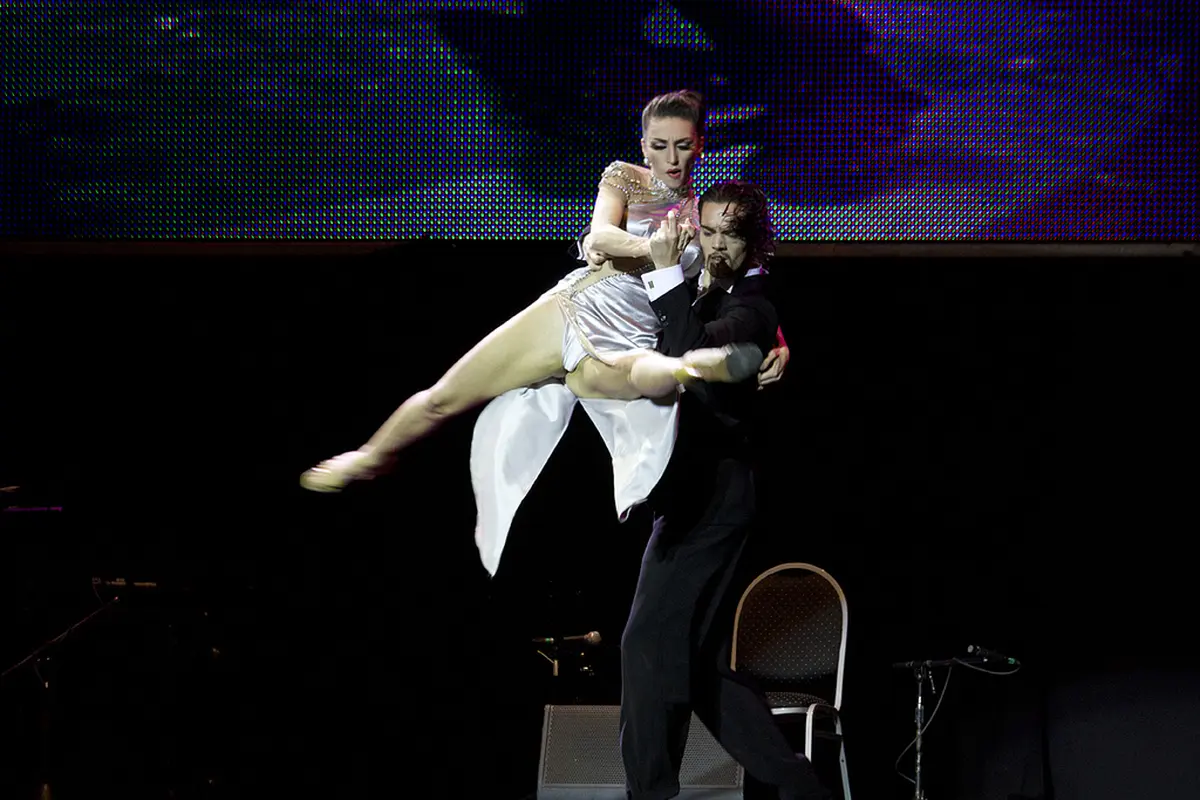
Rojo Tango is stage tango, the style built for an audience rather than for a social dance floor. On stage the embrace is often open, and the footwork is extended with lifts, kicks and drops you won't see at a milonga. The show tells the story of tango from the cabarets of the early 1900s to Astor Piazzolla's avant-garde vision, with costume changes along the way. Dancers, singers and musicians share one small room, so you watch from close by. There's no dialogue, so the story works in any language.
What you'll hear
The music is live. The Rojo Tango Quintet plays throughout, and singers join it, so you hear tango as song as well as dance music. Tango began as music for dancing in bars and dance halls. From the 1960s it moved into concert halls, with fuller orchestration and more dramatic arrangements, and composers such as Piazzolla, a virtuoso of the bandoneón, made it music to listen to as well. The show's story ends in that era. If the changing rhythms catch your ear, tango, vals and milonga each have their own pulse.
Read next: Tango, Vals and Milonga: What You're Actually Hearing
Tango in two minutes
Tango grew up in the 1880s along the Río de la Plata, the river between Argentina and Uruguay, in the poor port districts of Buenos Aires and Montevideo. UNESCO describes it as the creation of the urban lower classes, mixing the customs of European immigrants, descendants of enslaved Africans and the local criollos. In the early 1900s dancers and orchestras from Buenos Aires took it to Europe, and Paris led the first tango craze. In 2009 UNESCO added tango to its Intangible Cultural Heritage lists, on a joint proposal from Argentina and Uruguay.
Read next: The History of Tango: From the Docks to a Cabaret Stage
The room and the building
El Cabaret sits inside the Faena Hotel, in a former mill known locally as El Porteño. The lot was bought in 1902 by Bunge y Born, a firm with one of the country's largest wheat mills, and the building was made with bricks imported from Manchester. After a new port opened further north from 1911, the old docks lost their purpose, and by 1998 the empty mill was due for demolition. Alan Faena bought it and opened the hotel in October 2004, with Philippe Starck. The cabaret evokes the 1920s, in red velvet and soft light.
Children, access and language
Neither the booking details nor the show's own site sets an age limit or describes step-free access to El Cabaret. If you're travelling with children, or anyone in your group uses a wheelchair or has limited mobility, contact the provider before you book and get the answer in writing. On language, you need no Spanish to follow the show, because it's told through dance, music and song. For dinner and any special requests, a translation app is a useful backup.
Who this isn't for
Skip it if you want to dance tango yourself; a class or a milonga is the way to do that. Think twice if a long, late, seated evening is hard for you or your children, because the show is the last part of the night. It isn't a casual drop-in either: the dress code is smart and the evening runs to a fixed plan. And if old-Buenos-Aires atmosphere matters most to you, a traditional venue in a historic café may suit you better.
Puerto Madero by daylight
If you have time earlier in the day, Puerto Madero is worth a walk. Every street in the neighbourhood is named after a woman, and Santiago Calatrava's Puente de la Mujer, the Women's Bridge, links the east and west sides of the docks. At the river's edge, the Costanera Sur Ecological Reserve has six paths covering 10 km. Two museum ships, the corvette ARA Uruguay and the frigate ARA Presidente Sarmiento, are open to visitors in the docks. It's an easy way to see the district before you come back to it at night.
Frequently asked questions
What is the dress code for Rojo Tango?
The Faena Hotel lists it as business casual. Treat smart casual as the minimum, and leave sportswear, beachwear and flip-flops at your hotel.
Do I need to speak Spanish to enjoy Rojo Tango?
No. The show is told through dance, live music and song, with no dialogue to follow.
How do I get to the Faena Hotel for Rojo Tango?
Both booking options include hotel pickup and drop-off in a private vehicle. If you go on your own, take a taxi, because no subway line reaches Puerto Madero. The hotel offers valet parking.
What time does Rojo Tango start?
Go by the booking calendar and your confirmation, because published times differ between sources and can change. Dinner guests start earlier than show-only guests, and your pickup time is set from your start time.
Can children go to Rojo Tango?
No age limit is published. It's a late evening show in a hotel cabaret where drinks are served, so ask the provider before booking for children.
Is Rojo Tango wheelchair accessible?
Step-free access to El Cabaret isn't described in the booking details or on the show's own site. Ask the provider before booking, and get the answer in writing.
Sources